About Vasudhara Falls
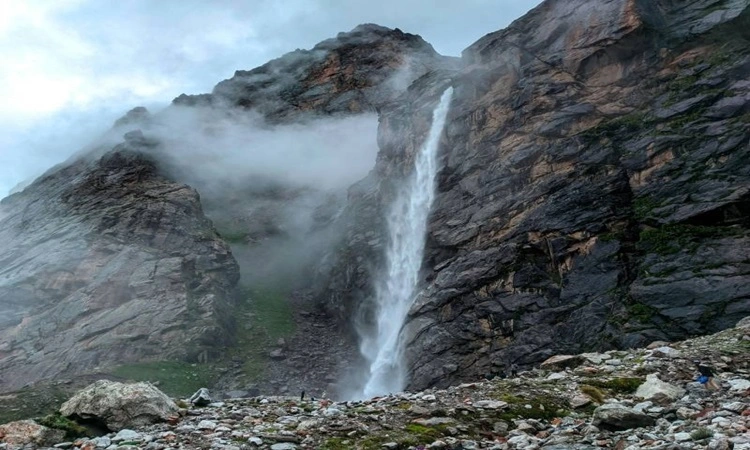
Vasudhara waterfall is one of the most beautiful and mysterious waterfalls located near Badrinath Temple in Uttarakhand. The waterfall cascades from a height of about 400 feet (122 meters) and flows into the Alaknanda River, making it a popular destination for trekkers, pilgrims, and nature lovers.
Is there a scientific explanation?
Renowned for its remarkable natural beauty, spiritual significance, and deep-rooted mythology, Vasudhara Falls is believed to possess divine qualities. According to local legends, the water of the falls never touches sinners and diverts away from those who are impure, adding to the mystery surrounding this sacred site.
In this blog, we explore Vasudhara waterfalls in detail — from trekking routes and travel tips to mythological stories and the best time to visit. Before diving deeper, here are some quick facts about this mystical waterfall near Badrinath.
Quick Facts
Mythological Stories of Vasudhara Falls
Why Does the Water of Vasudhara Falls Not Touch Everyone?
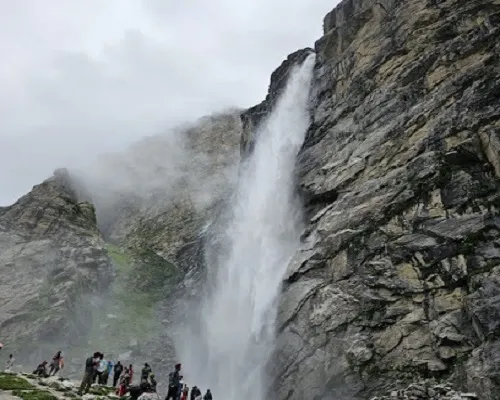
The mystery of why Vasudhara waterfalls "chooses" who to touch is the site’s most famous legend. According to local folklore, the water only falls on individuals who are pure of heart and free from sin. If a person carries "negative karma" or impure intentions, it is believed the water mysteriously diverts or drifts away, refusing to touch them.
Is there a scientific explanation?
While the spiritual belief is the main draw for pilgrims, there is also a geographical reason for this phenomenon. Because the waterfall drops from a massive height of 400 feet at a high altitude of 12,000 feet, the wind velocity in the valley is extremely high. These strong Himalayan winds often catch the light spray of the falls, blowing the water in different directions. This creates the "magical" effect where the water seems to intentionally avoid certain people standing beneath it.
The Spiritual Perspective
For locals and saints (Sadhus), this isn't just wind—it’s a divine test of purity. It serves as a symbolic mirror for visitors, encouraging them to reflect on their inner thoughts. This unique blend of natural physics and ancient myth is why Vasudhara remains one of the most spiritually significant waterfalls near the Badrinath Temple.
Which Pandava Died Near Vasudhara Falls?
This fall is located on the legendary Swargarohini route, famously known as the "Stairway to Heaven." According to the Mahabharata, this is the path the Pandavas took for their final journey (Mahaprasthana) to reach the celestial realm in their mortal bodies.
The Story of Sahadeva’s Sacrifice
While all the brothers and Draupadi traveled together, the journey was a test of spiritual endurance. Local tradition and scriptures suggest that Sahadeva, the youngest Pandava brother known for his immense wisdom and foresight, was the first of the five brothers to leave his mortal body near the Vasudhara waterfalls.
The Sequence of the "Fall"
To understand the significance of this site, it helps to look at the order in which the group fell during their ascent:
Draupadi: She was the first to fall (near the start of the valley).
Sahadeva: He fell near Vasudhara Fall. His "fall" symbolized the shedding of earthly attachments and pride in his own intelligence.
Nakula, Arjuna, and Bhima: They fell further up the trail toward the Satopanth Lake and Swargarohini glacier.
Why this spot is sacred today
Because Sahadeva—the most learned of the brothers—passed away in this valley, the area is considered a place of profound spiritual transition. Pilgrims believe that the air here still carries the energy of the Mahaprasthana, making it a powerful spot for meditation and seeking salvation (Moksha).
Why Is Vasudhara Falls Called the “Stream of Wealth”?
The name Vasudhara comes from Sanskrit:
Vasu – Wealth or divine beings
Dhara – Flow or stream
Together, the name translates to “Stream of Wealth”, symbolizing the continuous blessings of Goddess Lakshmi, the Hindu deity of prosperity and abundance. Devotees believe that visiting the falls with faith brings not material riches alone, but spiritual wealth, peace, and inner clarity.
Did the Asht Vasus Meditate at Vasudhara Falls?
According to the Puranas, the Asht Vasus—eight elemental deities representing forces of nature such as earth, water, fire, and wind—performed intense meditation and penance at Vasudhara waterfalls for thousands of years.
Because of this association, the site is often referred to as a “Path of Vasu”, connecting it symbolically to Lord Vishnu and the natural elements that sustain life.
How do you reach Vasudhara Falls from Haridwar, Rishikesh, or Dehradun?
Vasudhara Falls can be reached by traveling to Mana Village, the last motorable point near Badrinath, followed by a 6 km trek.
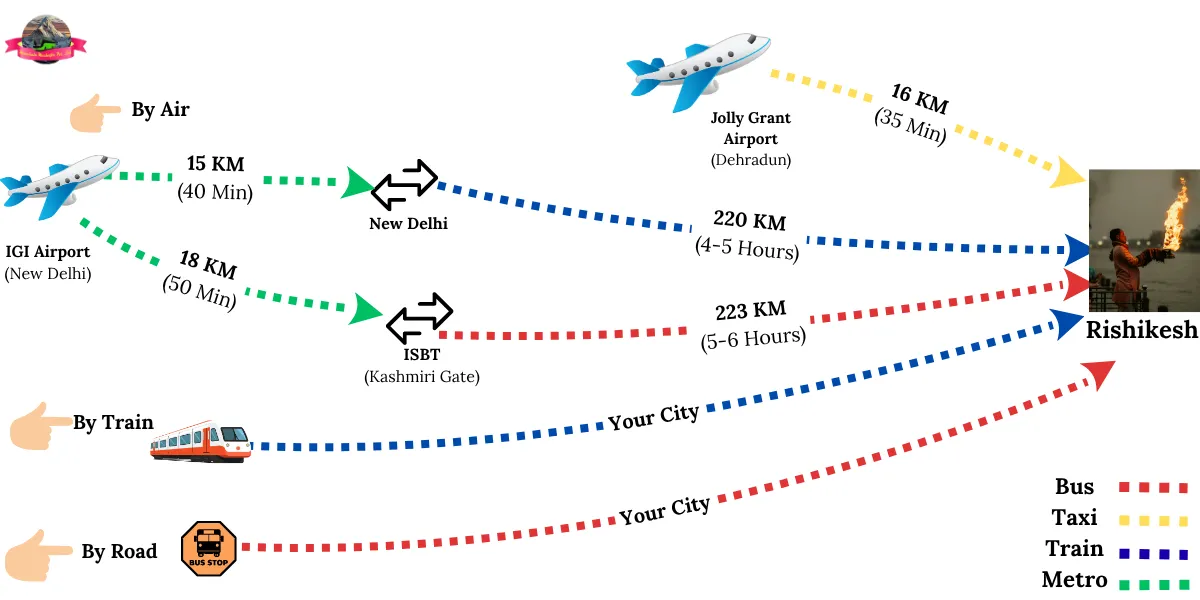
To begin the journey, travelers must first reach Haridwar, Rishikesh, or Dehradun, which are the nearest well-connected cities. The nearest railway station is Rishikesh, and the nearest airport is Jolly Grant Airport, Dehradun.
The journey to Vasudhara Falls is completed in three stages:
Step 1:- Reach Haridwar, Rishikesh, or Dehradun
Step 2:- Travel by road to Mana Village
Step 3:- Trek from Mana Village to Vasudhara Falls
Step 1:- Reach Haridwar, Rishikesh or Dehradun
Nearest major cities to this waterfall are Haridwar, Rishikesh and Dehradun, with proper connectivity of all the modes of transport, so first of all, you have to reach any of these cities before actually starting your trip to this mysterious waterfall near Badrinath temple. So let's start with the ways to reach any of these cities by different possible modes of travel.
Which is the nearest airport to Vasudhara Falls?
The Nearest airport to waterfalls is the Jolly Grant Airport, which is known as the Dehradun Airport. This airport was located at the foothills of the Himalayan ranges, offering a mesmerising view. This airport has good connectivity from all major cities in India, and almost all major aviation companies operate from this airport.
Dehradun airport was made strategically to give connectivity to all three major cities of Uttarakhand, i.e. Haridwar, Rishikesh and Dehradun. So if you are taking a flight to this airport, then you can book your stay at any of these cities.
But if you are coming from any 2nd-tier or 3rd-tier cities of India, then you may not get a direct flight to this airport. In that case, you can take a break journey at Delhi. Indira Gandhi International Airport of Delhi is the nearest International airport to Vasudhara waterfalls.
Travel Tip: Flights to Dehradun are often expensive. Flying to Delhi and continuing by train or bus is usually more economical and time-saving.
Which is the nearest railway station to Vasudhara Falls?
The Nearest railway station to this mysterious waterfall near the Badrinath temple is Rishikesh. But as this is a small railway station, you can also search for your train till Haridwar or Dehradun, as all these cities are located in the close vicinity.
If you don't get a direct train to any of these cities, you can book your train to New Delhi railway station or take a break journey to reach any of these cities.
Recommended Trains from Delhi
Dehradun Jan Shatabdi (12055)
Dehradun Shatabdi Express (12017)
Both trains stop at Haridwar and are considered reliable options for reaching Uttarakhand.
Step 2: How to Reach Mana Village by Road
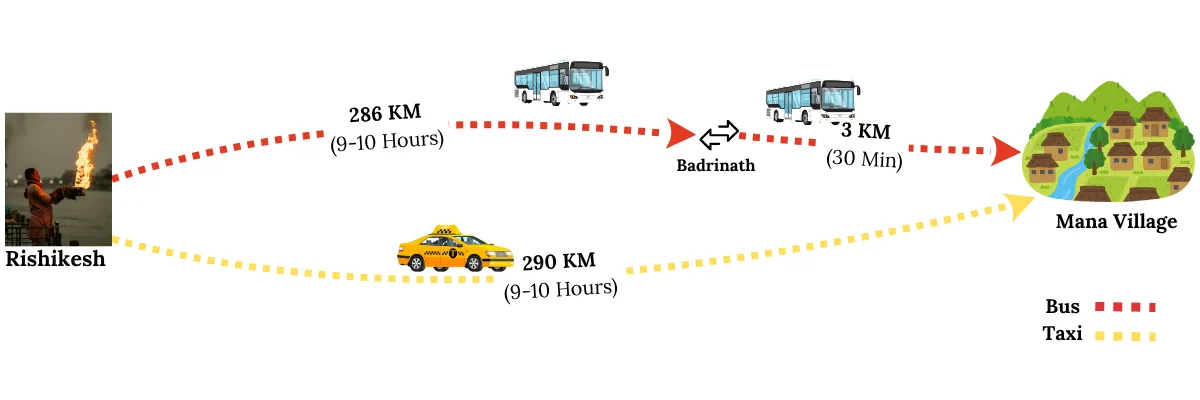
Once you reach Haridwar, Rishikesh, or Dehradun, the rest of the journey to Vasudhara Falls must be completed by road.
- 329 km from Dehradun
- 3 km from Badrinath Temple
- Haridwar and Rishikesh
- The Panch Prayag (Devprayag, Rudraprayag, Karnaprayag, Nandaprayag, Vishnuprayag)
- Dhari Devi Temple
- Pandukeshwar
Road Travel Options
Bus Options: Haridwar → Badrinath
| Operator / Company | Number of Buses per Day | First Departure | Last Departure | Approx Duration | Typical Fare (₹) |
|---|---|---|---|---|---|
| DevBhoomi Travels | 1 | 03:15 AM | 03:15 AM | ~12h 45m | ₹850 |
| Garhwal Motor Owners Union (GMOU) | 1 | 05:00 AM | 05:00 AM | ~12h | ₹950 |
| Royals Services | 2 | 04:30 AM | 07:00 AM | ~11h 45m | ₹900 – ₹1,000 |
Notes:
- Travel time is usually 11.5 to 13 hours, depending on route and stops.
- Buses reach Badrinath (motorable). From there, it’s ~3 km by road to Mana village and a 6 km trek to Vasudhara Falls.
Step 3: Trek from Mana Village to Vasudhara Falls
Pro Tip:-
- Please wear comfortable trekking shoes and carry bottled water and some form of snack for the trip.
- It is also recommended to start your trek from Mana village early in the morning so that you can reach the waterfall comfortably and return to Mana village before it gets dark.
- You will not get any accommodation option at Vasudhara waterfalls, so ensure to return to Mana before getting dark or carry your own camping equipment.

Vasudhara Falls Distance Chart
| City | Road Distance to Badrinath (km) | Road Distance to Mana (Badrinath + 3 km) | Trek (Mana → Vasudhara) | Total Distance (Approx) |
|---|---|---|---|---|
| Delhi | ~535 km | ~538 km | 6 km | ~544 km |
| Dehradun | ~320–337 km | ~323–340 km | 6 km | ~329–346 km |
| Rishikesh | ~286–300 km | ~289–303 km | 6 km | ~295–309 km |
| Haridwar | ~316–322 km | ~319–325 km | 6 km | ~325–331 km |
| Haldwani | ~329–347 km | ~332–350 km | 6 km | ~338–356 km |
| Nainital | ~306–316 km | ~309–319 km | 6 km | ~315–325 km |
| Almora | ~285–297 km | ~288–300 km | 6 km | ~294–306 km |
| Pithoragarh | ~365–405 km | ~368–408 km | 6 km | ~374–414 km |
Vasudhara Falls Trek: Distance, Difficulty, and Experience
How Far is the Trek from Mana Village to Vasudhara Falls?
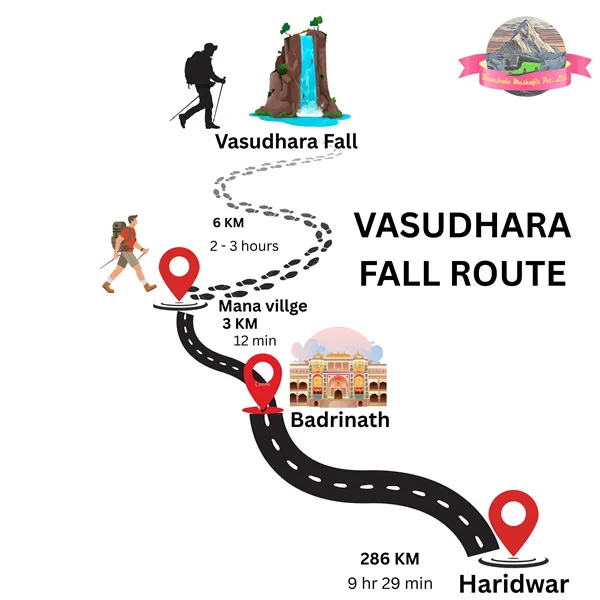
The trek begins at Mana Village, the last inhabited village before the border, located just 3 km from the Badrinath Temple.
Features of the trek:
One-way trek distance: 6 km
Total distance from Badrinath: 9 km
Altitude at the waterfall: 12,000 feet
My Pace: I managed to complete the ascent in about 2.5 hours. I highly recommend starting your trek by 8:00 AM. This allows you to avoid the midday sun and ensures you aren't racing against sunset on your way back.
How difficult is the Vasudhara Falls trek for beginners?
- The Terrain: The path is largely rocky and uneven. There are several steep inclines that will test your calf muscles.
- The Air: At 12,000 feet, the oxygen is thinner. I noticed that even simple inclines made me feel breathless faster than usual. My tip? Take "micro-breaks" every 15 minutes to let your heart rate settle.
- The Reward: Don't let the difficulty deter you. The trail offers some of the best views in the Garhwal Himalayas, including the towering Neelkanth Peak and the Satopanth range.
My Personal Take: Is the trek worth it?
Best Time to Visit Vasudhara Falls
As we know, Vasudhara waterfall is located in the remote region of the Himalaya in Chamoli district of Uttarakhand, which experiences a wide range of weather conditions throughout the year. Here is the breakdown of season-wise weather.
| Season (Months) | Temperature Range | Conditions | Best for Trekking / Sightseeing |
|---|---|---|---|
| Summer (May – June) | 10 °C – 20 °C | Pleasant and mild weather, warm days, clear skies, accessible trails | ✔ Yes (Ideal) |
| Monsoon (July – Sept) | 5 °C – 15 °C | Heavy rainfall, high humidity, lush greenery, but landslides and slippery trails | ✘ No |
| Autumn (Sept – Oct) | 5 °C – 10 °C | Retreating rains, clear skies, lush greenery, excellent visibility | ✔ Yes (Perfect) |
| Winter (Nov – Apr) | 0 °C – 5 °C | Extreme cold, heavy snowfall, trails covered in snow, and difficult navigation | ✘ No |
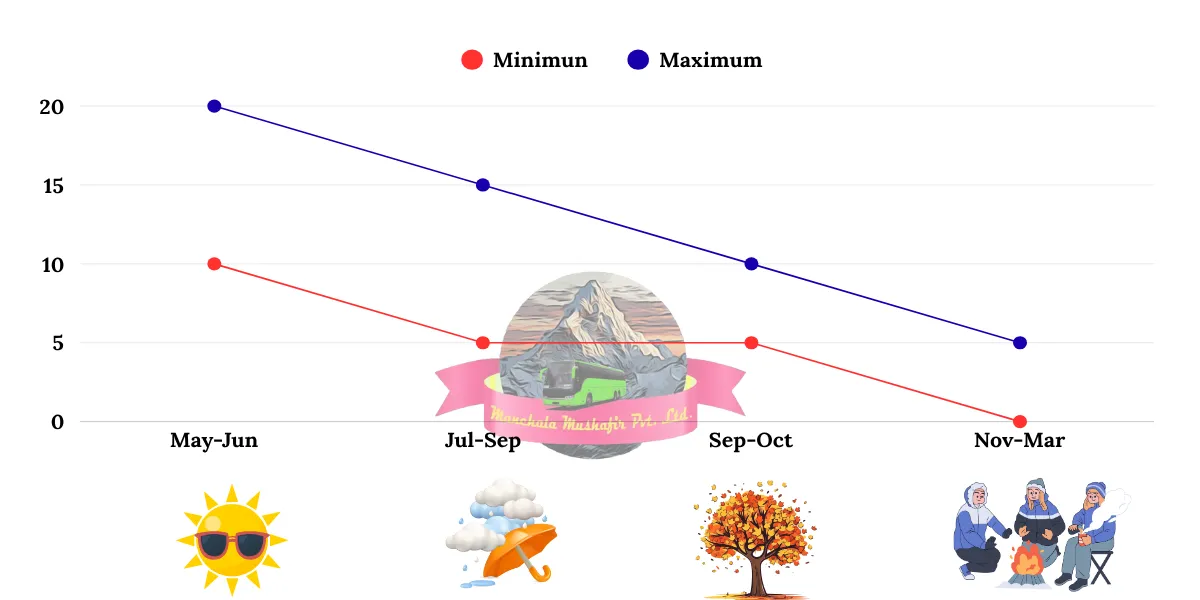
Summer (May to June):- In the Summer season, Vasudhara experiences pleasant and mild weather, making it an ideal time for trekking and sightseeing.
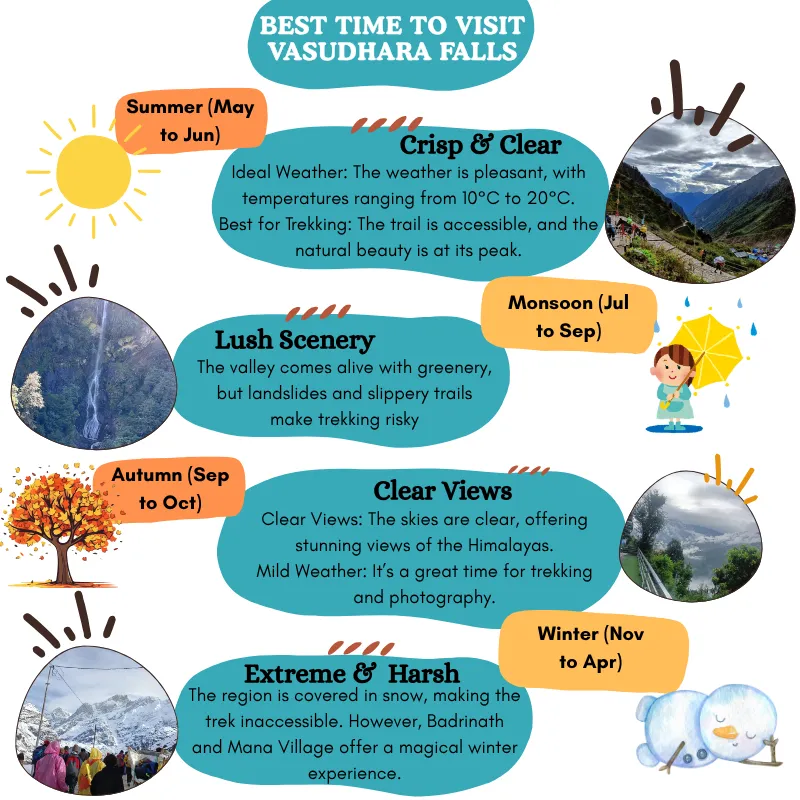
- Temperature: At this time, the temperature ranges from 10 °C to 20°C.
- Condition: Days are warm and crisp. clear skies and accessible trails.
Monsoon (July to September):-This time brings heavy rainfall and high humidity.
- Temperature: ranges from 5 °C to 15 °C
- Condition: This period sees lush greenery, but heavy rain leads to landslides and makes the trails slippery, not ideal for trekking.
Autumn (September to October):- This time, rain starts retreating, which offers pleasant weather conditions.
- Temperature: The temperature at thiw water falls, drops to a range of 5–10°C.
- Condition: Offer clear skies and visibility with lush greenery, making it another perfect time for trekking and sightseeing.
Winter (November to April):- Winter months experience extreme and harsh weather conditions with dropping temperatures.
- Temperature: The temperature drops in the range from 0 °C to 5 °C.
- Condition: This period sees heavy snowfall; the trails are covered with the snow, making it difficult to navigate.
Important Note: Avoid visiting Vasudhara waterfall during the monsoon and winter months, as these periods lead to heavy rain and snow, which make the trails inaccessible and difficult.
Top Packages
 |  |  |
Nearest Places to Visit Around Vasudhara Falls
While Vasudhara Fall is the main attraction, there are
plenty of other activities and sights to explore nearby:
1) Mana Village
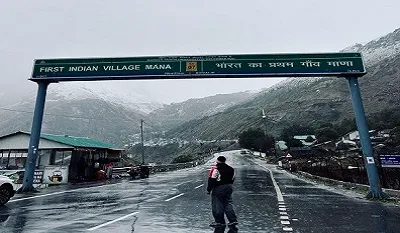 This captivating destination is located near Badrinath
Temple, often referred to as the first Indian village before the Tibetan
border. Set against the majestic backdrop of the Himalayas, this village is
known for its natural beauty, Tibetan culture, local cuisine, and handmade
goods. This village also found its mention in the Vedas, and now it is well
known as the only village where the river Saraswati can be spotted. Every year,
lakhs of tourists visit this place and admire its beauty.
This captivating destination is located near Badrinath
Temple, often referred to as the first Indian village before the Tibetan
border. Set against the majestic backdrop of the Himalayas, this village is
known for its natural beauty, Tibetan culture, local cuisine, and handmade
goods. This village also found its mention in the Vedas, and now it is well
known as the only village where the river Saraswati can be spotted. Every year,
lakhs of tourists visit this place and admire its beauty.
Location: Chamoli district of Uttarakhand.
Height/Altitude: 10,500 feet above sea level.
Highlights: sacred caves (Vyas Gufa, Ganesh Gufa), Bheema Pul, views of Nar-Narayan peaks, and diverse flora and fauna of the village.
Best time to visit: May-June and September-October, when the weather is pleasant and provides excellent visibility.
Accessibility: The Nearest Railway station is Rishikesh, and the nearest airport is Jolly Grant Airport. The only way to reach here after reaching Rishikesh, Haridwar or Dehradun is by road.
2) Badrinath Temple
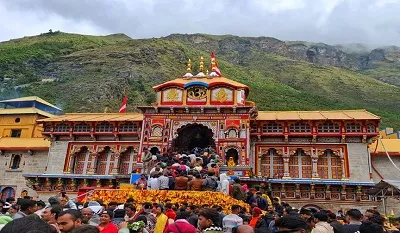
Located just a 30-minute drive from Mana Village is one of
the four pilgrimage sites for the Hindu religion, which is collectively known
as Chota Char Dham Yatra and includes visits to the temples like Yamunotri
temple, Gangotri
temple, Kedarnath
temple and Badrinath temple. Being an integral part of the Char Dham
Yatra, this temple is dedicated to Lord Vishnu, who is worshipped here as
Badrinarayan. The temple holds immense spiritual significance and is visited by
thousands of devotees every year.
Badrinath Temple is available for darshan for six months in a year, from April or May to November, as it remains closed due to snowfall in winter. You can check out our blog on Badrianth temple opening and closing dates 2026 for exact dates.
People not only come here to pray but also to find the
tranquillity and spirituality that this place and its environment provide. But being located in the hilly region weather here is very unpredictable. If you are planning to visit the Badrinath temple with Vasudhara in 2026, then do refer to our blog on the best time to visit the Badrinath temple for a better understanding of the climatic and weather conditions around this temple.
Location: Garhwal Hills of Chamoli district in Uttarakhand
Height/Altitude: 10,279 feet above sea level on the banks of the Alaknanda River.
Highlights: Sacred hot springs (Tapt kund), views of Nar-Narayan peaks, and colourful bazaars near the temple.
Best time to visit: Accessible for six months in the year, from May to June and September to October.
Accessibility: By road, it has better connectivity to reach the temple. Haridwar, Rishikesh, and Dehradun are the nearest railheads.
Note: If you are booking the Do Dham yatra package with Manchala Mushafir and you have some spare time, then you can get the Vasudhara waterfall trek included in your package. Just call our customer care executive, and they will chalk out the best package for you.
3) Saraswati River
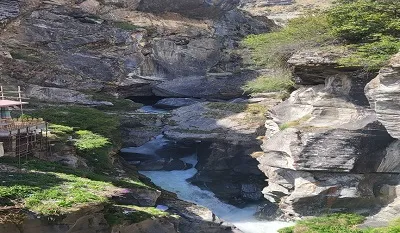
Mana Village is the last Indian settlement before the
Tibetan border and is home to the origin of the Saraswati River and the most remarkable point to visit near Vasudhara waterfall. A river
steeped in mythology and considered sacred by Hindus. It is one of the few
places where the river is visible above ground before merging with the
Alaknanda River.
According to Hindu mythology, the Saraswati River is
believed to flow underground for most of its course. At Mana Village, you can
witness its rare surface appearance. The point of confluence where the
Saraswati meets the Alaknanda is called Keshav Prayag, a sacred spot revered by
pilgrims.
Location: near Mana village, flows under the Bheema Pul
Height: The river originates from Mana village, which is located at an altitude of 3,219 meters above sea level.
Highlights: Panoramic views of the vistas, glaciers, and peaks.
Best time to visit: Similar to Mana Village, from May to June and September to October.
Accessibility: By a shuttle walk of around 30 minutes from Mana village.
4) Satopanth Lake
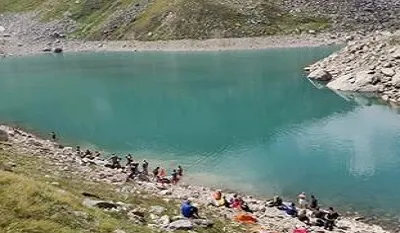
Satopanth Lake is at an altitude of 4575 meters, which is an interesting trekking place for those who love treks. This is another beautiful glacial lake, which is about 22 km away from Badrinath and is a tough trekking zone, but it is one of the most beautiful places on earth.
The name of the place is derived from the Sanskrit meaning Satopanth, which means Path of Truth and the lake is considered sacred by Hindus. People believe that the Hindu trinity of Gods, Brahma, Vishnu and Shiva, perform their penance along the shores of this lake. Emerald Lake is surrounded by mountain tops with snow on them.
Location: Chamoli district of Uttarakhand, near Badrinath and Mana village.
Height/Altitude: 15,092 feet above sea level.
Highlights: crystal views of the glacial lake and surrounding scenery.
Best time to visit: May-June and September-October.
Accessibility: by a 22 km trek, which is considered moderately difficult due to steep inclines.
5) Valley of Flowers
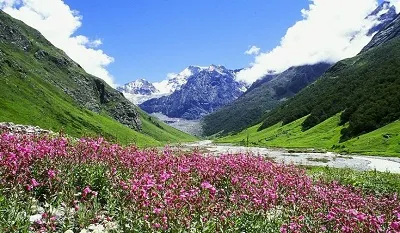 A natural park and a UNESCO World Heritage site, renowned for its stunning natural beauty, is nestled in the Garhwal Himalayas of Uttarakhand. The site is often called the “Phoolon ki Ghati.” The valley is a part of the Nanda Devi Biosphere Reserve, and it lies in the Byandaur Ganga valley, near Joshimath town. Want to visit here? Check the Valley of Flowers trek.
Location: Joshimath town in the Chamoli district of Uttarakhand.
Height/Altitude: The altitude of the Valley ranges between 10,500 feet and 11,800 feet.
Highlights: Diverse flora and fauna, alpine meadows, and surrounding scenery, including glaciers and peaks.
Best time to visit: The Valley is accessible in summer and Autumn, from May to October, and it becomes inaccessible during the winter due to harsh weather.
Accessibility: by a 14 km trek, which starts from Govinghat and Ghagriya serves as the base for the trek, and it is considered moderately challenging due to steep ascents and altitudes.
Travel Note: A Permit may be required for trekking to this site, which is provided by the Forest Department of Uttarakhand.
6) Pandukeshwar:

A sacred village, located in the Chamoli district of Uttarakhand, is renowned for its stunning Himalayan setting, surrounded by snow-covered peaks and great spiritual significance associated with the Mahabharata. Pandukeshwar village is featured by many sacred temples, like the Yogdhayan Badri Temple (One of the Panch Badri and Sapt Badri temple circuit) and Vasudeva Temple.
Location: Chamoli district of Uttarakhand, on the Badrinath temple road.
Height/Altitude: Pandukeshwar, Uttarakhand, is situated at an elevation of 1,829 meters (6000 feet) above sea level on the banks of the Alaknanda River.
Highlights: Yogdhyan Badri Temple, Vasudeva Temple, and the surrounding scenery.
Best time to visit: May-June and September-November, when the weather is pleasant, and the trails are accessible.
Accessibility: By air, train, and road. Travel to the Gateway cities of Uttarakhand (Haridwar, Rishikesh, and Dehradun) and follow a road journey via taxi or bus to reach Pandukeshwar.
7) Tapt Kund:
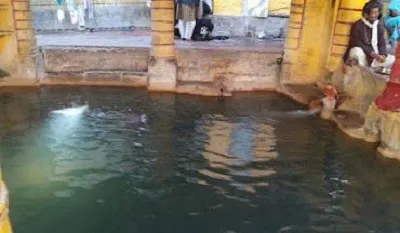
A sacred, warm, natural hot spring, located near the Badrinath temple. It holds great significance with its medicinal properties in its water. Pilgrims take a holy bath in this kund before heading to the Badrinath temple, as it is believed that taking a bath at this sacred kund cleanses the sins of pilgrims.
Location: Badrinath town in the Chamoli district of Uttarakhand.
Height/Altitude: The kund is located in Badrinath town, at an altitude of 3,100 meters (10170 feet) above sea level.
Highlights: The Tapt Kund with sacred significance is the main highlight of the spot, and the high temperature of the water provides relief from the cold climate.
Best time to visit: summer and monsoon, from May-June and Sep-Oct, when the main Badri temple is accessible.
Accessibility: Tapt Kund is accessible by a short walk from the Badrinath temple.
8) Mata Murti Temple:
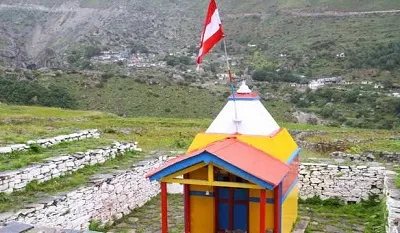
A sacred temple, located 3 km away from the Badrinath temple, holds great significance and is one of the most amazing places to visit near Vasudhara fall. The temple is dedicated to Mata Murti, who is often regarded as the mother of lord Vishnu, and it is surrounded by the Nar-Narayan mountain ranges.
Location: Inside the Badrinath town, a few kilometres from the main Badrinath temple.
Height/Altitude: approx. 3,131 meters (10272 feet) above sea level.
Highlights: The colourful bazaars, annual fair, and vibrant scenery are the main highlights.
Best time to visit: The temple remains open only when Badrinath is accessible from May to October, and it is closed in winter due to cold and harsh weather.
Things to Consider Before Visiting Vasudhara Falls.
Here are some practical tips to ensure a smooth and enjoyable trip:
Prepare for the Trek: Whenever you engage in hiking, wear sturdy shoes, ensure that you have enough water to drink, and wear clothes that will allow you to remove or add layers as the environment warms up or cools down.
Start Early: Make good use of daylight when attempting the trek; therefore, start early in the morning.
Respect Nature: No littering and other environmentally friendly actions should be practised to maintain the beauty of the place.
Guide: For unfamiliar terrains, it is preferred to hire a guide to avert possible risks and offer some recommendations.
Acclimatise: You should spend a day at Badrinath or Mana to have a preliminary look at the high-altitude treks.
The Beauty of Vasudhara Falls
It was a privilege to stand before the Vasudhara waterfalls. The towering heights and roaring waters, as well as the geographical setting of the Himalayas, form a sensational scene. Integrated with the colour of the rainbow, the water seems to move as if made of liquid silver, amidst the sunlight, the falls seem mystical.
In terms of photographers and nature lovers, Vasudhara waterfalls are simply fascinating as they provide a very striking view of the Himalayan range. To some, it is a means of exercise, a form of exercise; others see it as a space for meditation.
Travel Costs: Haridwar → Vasudhara Falls
| Mode of Transport | Approx Cost (One-Way) | Cost Basis | Notes / Coverage |
|---|---|---|---|
| Private taxi (sedan) | ₹5,000 – ₹10,000 | Per vehicle | Door-to-door convenience; good for 1–4 passengers; includes tolls and driver allowance. |
| Private taxi (Innova / SUV) | ₹7,000 – ₹12,000+ | Per vehicle | More space & comfort for families/groups; premium package. |
| Shared taxi/jeep | ₹600 – ₹2,000 | Per person | Shared with other travellers; cheaper; availability depends on season and pickup point. |
| Bus (state / private) | ₹850 – ₹2,600 | Per person | Non-AC seater to premium Volvo; buses reach Badrinath (motorable). |
| Self-ride / rented bike | ₹500 – ₹1,800 + fuel | Per bike / per day | Economical for solo riders; fuel and mountain driving skills required. |
| Own car (fuel + tolls) | ₹3,500 – ₹6,000 | Estimated total | Depends on fuel efficiency, route; per-person cost decreases with more occupants. |
Notes:
- All costs are approximate; actual fares vary by season, operator, and availability.
- Final approach to Vasudhara: drive to Badrinath → ~3 km to Mana → ~6 km trek to the falls.
- Shared taxis and private vehicles may vary depending on group size and negotiation.
FAQs
What is the mystery of Vasudhara Falls?
What is the story of Vasudhara Falls?
Which rive flows through Vasudhara Falls?
Is Vasudhara Fall real or Fake?
Conclusion
Vasudhara Falls is not just a waterfall of considerable height, but is also a beautiful place to visit, a pilgrimage site, thrilling and serene. From being a hardcore trekker to a religious pilgrim or simply a villager escaping crowds and noisy city life, this waterfall is always tempting.
That’s why it’s necessary to pack up and put on trekking shoes to get to this mysterious waterfall near Mana Village. To look into the scenic beauty, calm and composed atmosphere, as well as the legendary tales.
Related Blogs
Mana
Village: The First Village of India
Tapt
Kund: The Healing Hot Spring Near Badrinath Temple
Pandukeshwar:
The Spiritual Gateway to Badrinath
Top
7 Places to visit around Kedarnath and Badrinath Temple
Explore
the Beauty of Gopeshwar, Uttarakhand
Joshimath:
The Gateway to Badrinath and Auli
Top
4 Places to Visit Around Badrinath Temple – Uttarakhand
All
you want to know about Badrinath
Uttarakhand Top Blog
Winter Char Dham of Uttarakhand
Top 7 Trekking Destinations of Uttarakhand
Explore the Beauty of Gopeshwar, Uttarakhand
Most Popular Temples in Uttarakhand
Top 10 Weekend Treks in Uttarakhand
Top 4 Places to Visit Around Badrinath Temple – Uttarakhand
Top 12 Places to visit during Char Dham Yatra | Uttarakhand
Top Nine Places to Visit in Uttarakhand
Kalimath- A Holy Shaktipeeth, Uttarakhand
Madhyamaheshwar Temple Uttarakhand
Why You Should Visit Surya Kund Yamunotri Natural Hot Spring
Joshimath: The Gateway to Badrinath and Auli
Barkot Uttarkashi: Best Places to Visit & Things to Do
Gartang Gali: The Wooden Bridge Trek Route
Harsil Valley: The Hidden Gem of the Himalayas
Most Famous Temples in Uttarakhand
Chopta Trek: A Himalayan Adventure Awaits
Gangotri Temple: The Abode of Maa Ganga
Chorabari lake – The Pristine lake near Kedarnath Temple
Kalimath Temple Rudraprayag Uttarakhand Guide 2026
Rudranath Temple – Toughest among the Panch Kedar
Mana Village: The First Village of India
Triyuginarayan Temple: A Sacred Place
Unveiling The Hidden Wonders Of Makkumath
All about Ukhimath and Places to visit around- Travel Guide
All about Panch Kedar- Legend and Mythology
Tungnath Temple: Twelve Fascinating Facts
Best Travel Agency In Haridwar
9 Best trekking destinations of India
Winter seats of Panch Kedar Temples
Top 7 Places to visit around Kedarnath and Badrinath Temple
Haridwar, Uttarakhand: A Place of Spiritual Healing
Agastya Muni: A Sacred Place of Peace and Devotion
Pandukeshwar: Gateway to Badrinath
Hemkund Sahib -The Highest Gurudwara In The World
Tapt Kund: The Healing Hot Spring Near Badrinath Temple